Showing posts with label Closed Station. Show all posts

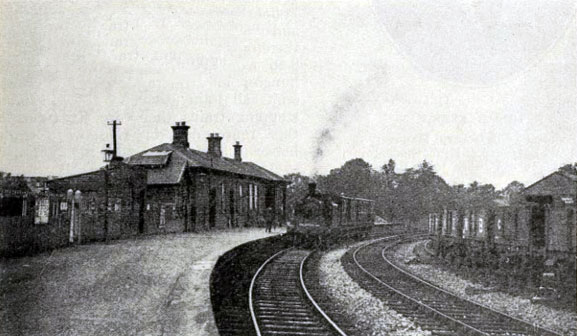
Benderloch

Benderloch was a stop on the Ballachulish Branch Line in Argyll and Bute between North Connel and Barcaldine.

Benderloch station [1]


Information
Type: Caledonian Railway (Ballachulish Branch Line)
Opened: 1903 (Closed 1953)
Re-opened: 1953 (Closed 1966)
Platforms: 2

The station was opened in 1903 by the Callander & Oban Railway, later becoming part of the Caledonian Railway. The station was closed in May 1953 due to flooding washing away a bridge but was re-opened a few months later, however it closed for good in 1966 when the line was closed.

The station had two platforms which were either side of a passing loop. Both the LMS and British Railways positioned camping coaches at the station.

[1] E.B Hutchinson, "Signalmen and their duties", (Railway Magazine) p. 408

Stanley Junction

Stanley Junction was at the junction of the Scottish Midland Junction Railway and Perth & Dunkeld Railway in Perthshire between Strathord and Cargill or Murthly.

Stanley Junction [1]


Information
Type: Scottish Midland Junction Railway
Opened: 1848
Closed: 1956
Platforms: 3

The original station was opened as Stanley by the Scottish Midland Junction Railway in 1848, in 1857 it was replaced by a new station (called Stanley Junction) for the junction with the Perth & Dunkeld Railway. It was later absorbed into the Caledonian Railway. The station was closed in 1956.

[1] R.E. Charlesworth, "Twenty four hours at Carlisle", Railway Magazine (November 1907) p. 382

Forfar

Forfar was a terminus of the Scottish Midland Junction Railway, where it met the Arbroath and Forfar Railway, in Angus.

15229 at Forfar [1]


Information
Type: Scottish Midland Junction Railway
Opened: 1848
Closed: 1967
Platforms: 2

The station was opened in 1848, it was not the town's first station. That was Forfar Playfield which opened in 1838, it was closed when the new station was opened. The station and line later became part of the Caledonian Railway and later still the LMSR.

The station was closed in 1967 along with most of the SMJR route for passenger traffic though the line remained open for freight until 1982.

[1] "The Perth-Dundee-Montrose Section of the LMSR", The Railway Magazine p. 116

Kirriemuir

Kirriemuir was a stop on the Scottish Midland Junction Railway in Angus between Kirriemuir Junction and Glamis.

Kirriemuir [1]


Information
Type: Scottish Midland Junction Railway
Opened: 1861
Closed: 1952
Platforms: 1

The station was opened in 1861 by the Scottish North Eastern Railway on it's line from Perth to Forfar, which was known as the Scottish Midland Junction Railway. It later became part of the Caledonian Railway.

The station was closed to passengers in 1952 though goods traffic continued until 1965.

[1] "The Perth-Dundee-Montrose Section of the LMSR", The Railway Magazine p. 6

Brayton

Brayton was a junction railway where the Solway Junction Railway joined the Maryport & Carlisle Railway in Cumbria. On the latter Brayton was between Leegate and Aspatria on what is now the Cumbria Coast Line.

Signal box at Brayton Junction [1]


Information
Type: Solway Junction Railway
Opened: 1844
Closed: 1950
Platforms: 3

The station was opened by the Maryport & Carlisle Railway in 1844 though was not available for public use until 1848. In 1870 Brayton became a junction station when the Solway Junction Railway arrived, the next stop along the line being Bromfield. The station had extensive sidings for the Solway Junction Railway.

However, passenger traffic on the Solway Junction Railway was never high and was suspended in 1917, though reinstated after the First World War only to cease for good when the Solway Junction Railway closed in 1933. The station remained open on the mainline until 1950 when passenger traffic ceased, goods traffic continued until the mid-1960s.

Coaches stored at Brayton sidings


[1] G.J. Aston & D.S. Barrie, "The Solway Junction Railway", Railway Magazine 70 (415) p. 32

Whitrigg

Whitrigg was a stop on the Solway Junction Railway in Cumbria between Abbey Junction and Bowness.

Whitrigg station [1]


Information
Type: Solway Junction Railway
Opened: 1870
Closed: 1921
Platforms: 1

The station was opened by the Solway Junction Railway in 1870. The station was a request stop with a single platform and a wooden shelter and was never heavily used. The station has a single goods siding. Next to the station was a level crossing, which was later controlled by a signal box.

The station's passenger service was suspended in 1917 as a wartime economy measure. Although it was reinstated in 1920, passenger services stopped again the following year and the line was closed.

[1] G.J. Aston & D.S. Barrie, "The Solway Junction Railway", Railway Magazine 70 (415) p. 30

Upper Greenock

Upper Greenock was a stop on the Inverclyde Line in Inverclyde between Ravenscraig and Port Glasgow.

The station just after it's rebuilding, it had an island platform [1]


Information
Type: National Rail (Inverclyde Line)
Opened: 1865
Closed: 1967
Platforms: 2

The station was opened in 1865 by the Greenock & Wemyss Bay Railway, later becoming part of the Caledonian Railway. The station was rebuilt when the line to Wemyss Bay was doubled in the early 1900s. The station was closed in 1967 though the line remains open and is nowadays the Inverclyde Line. Traces of the old station remain including a bricked up entrance.

Station entrance, parts of this entrance survive though nowadays bricked up [1]


[1] Arthur B. Tatlow, "The Doubling of the Wemyss Bay Line of the Caledonian Railway", Railway Magazine (June 1903) p. 460

Coupar Angus

Coupar Angus was a stop on the Scottish Midland Junction Railway in Perth & Kinross between Ardler and Woodside & Burrelton. It was also a terminus of the Blairgowrie branch.

Coupar Angus station [1]


Information
Type: Scottish Midland Junction Railway
Opened: 1837
Closed: 1967
Platforms: 2

The station was opened by the Dundee & Newtyle Railway in 1837. This station closed in 1847 but was re-opened the following year by the Scottish Midland Junction Railway. In the late 1850s a branch line was built as far as Blairgowrie. The branch line was closed in 1965, though passenger traffic had stopped in the mid-1950s.

Coupar Angus itself was closed in 1967. 

[1] "The Perth-Dundee-Montrose Section of the LMSR", The Railway Magazine p. 4

Beith Town

Beith Town was the terminus of a short branch line in Ayrshire, the preceding station was Barrmill.

A train arriving at Beith Town


Information
Type: Glasgow, Barrhead and Kilmarnock Joint Railway
Opened: 1873
Closed: 1962
Platforms: 1

The station was opened in 1873 by the Glasgow, Barrhead and Kilmarnock Joint Railway as the terminus of a five mile long branch line from Lugton. The station was just called Beith when it was opened, even though there had already been a nearby station called that since 1840! The other station, which had been opened by the Glasgow, Paisley, Kilmarnock and Ayr Railway, was finally renamed Beith North in 1923, though the GB & KJR station did not change it's name to Beith Town until 1953.

The station was closed to passenger traffic in 1962 though remained open for freight for a couple more years until final closure. The station site has been redeveloped and the track lifted.

[1] J. Francis, "The Glasgow, Barrhead & Kilmarnock Joint Railway", The Railway Magazine p. 35

Alyth

Alyth was the terminus of a branch line of the Caledonian Railway in Perthshire. 

A train at Alyth [1]


Information
Type: National Rail (Caledonian Railway)
Opened: 1861
Closed: 1951
Platforms: 1

The station was opened by the Alyth Railway in 1861, the final stop on a branch line from Alyth Junction (with two intermediate stops). The station later became part of the Caledonian Railway and it's successors. Although traffic on the line was good early on, the population of Alyth declined over time and so did traffic and the need for the railway. Alyth and the branch line were closed for passenger traffic by British Railways in 1951 though the line did remain open until 1965.

[1] "The Perth-Dundee-Montrose Section of the LMSR", The Railway Magazine p. 4

St Fillans

St Fillans was a stop on the Lochearnhead, St Fillans and Comrie Railway in Perthshire between Dalchonzie Halt and Lochearnhead.
St Fillans [1]


Information
Type: National Rail (Lochearnhead, St Fillans and Comrie Railway)
Opened: 1901
Closed: 1951
Platforms: 2

The station was opened by the Lochearnhead, St Fillans and Comrie Railway in 1901. The railway, although it carried passenger traffic, was intended for freight. However, the amount of freight traffic disappointed and passenger revenues were not high enough to cover the costs of the line. St Fillans and the other stations on the line were closed in 1951.

The station had a station building on it's west platform which still exists though the line has now been lifted. The station had a good yard to the north.

[1] G.A. Sekon, "Twentieth century railway development, No: 14 Caledonian Railway", Railway & Travel Monthly Vol. 5 No. 30 (October 1912) p. 283

Symington

Symington was a junction station on the Caledonian Railway in South Lanarkshire between Lamington and Thankerton or Coulter.
Symington station [1]


Information
Type: National Rail (Caledonian Railway)
Opened: 1848
Closed: 1965
Platforms: 3

The station was opened by the Caledonian Railway in 1848 on it's line from Carstairs to Carlisle. The station became a junction in 1860 with the opening of the Symington, Biggar and Broughton Railway which eventually reached Peebles. Symington station was resited in 1863 to where the junction was. The station had three platforms, the line to Peebles sharing an island platform with the line towards Glasgow.

The line to Peebles was closed in 1950, Symington itself was closed in 1965. The line remains open and is nowadays part of the West Coast Main Line.

[1] H.C.H. Moller, "The Peebles branch of the LMSR", Railway Magazine p. 30

Bromfield

Bromfield was a stop on the Solway Junction Railway in Cumbria between Brayton and Abbey Junction.
Bromfield station [1]

Information
Type: Solway Junction Railway
Opened: 1873
Closed: 1921
Platforms: 1

The station was opened by the Solway Junction Railway in 1873 serving a small village on the English side of the Solway Firth. The station was small with just a single platform though had a private goods siding.

The station was not successful. By 1910 the service was limited to just a handful of trains a day and later reduced even further. In 1917 passenger services ceased completely but were reinstated in 1920 only to cease for good in 1921. The line remained open until 1933.

[1] G.J. Aston & D.S. Barrie, "The Solway Junction Railway", Railway Magazine 70 (415) p. 32

Old Kilpatrick

Old Kilpatrick was a stop on the Lanarkshire and Dunbartonshire Railway in West Dunbartonshire between Dalmuir Riverside and Bowling.
Old Kilpatrick [1]


Information
Type: Lanarkshire and Dunbartonshire Railway
Opened: 1896
Closed: 1964
Platforms: 2

The station was opened by the Lanarkshire and Dunbartonshire Railway in 1896. The station had matching station buildings on the two platforms. Access to the platforms was via ramps from road level.

The station was closed in 1964 along with much of the former Lanarkshire and Dunbartonshire Railway due to rationalisation of rail services following electrification of the North Clyde Line in the 1960s. The town's other station Kilpatrick on that line remains open.

[1] R.E. Charlesworth, "Twenty four hours at Carlisle", Railway Magazine (November 1907) p. 382

Lugton

Lugton was a stop on the Glasgow South Western Line in Ayrshire between Barmill or Dunlop and Caldwell.
Lugton station [1]


Information
Type: National Rail (Glasgow South Western Line)
Opened: 1871
Closed: 1966
Platforms: 2

The station was opened in 1871 by the Glasgow, Barrhead & Kilmarnock Joint Railway. The line branched off at Lugton to serve a branch to Beith Town. Lugton was closed in 1966 though the line remains open, the branch to Beith has now been severed. 

Although Lugton no longer has a station, it was the scene of a major railway accident training exercise in 2000 to test emergency services response to two passenger trains crashing at Lugton!

[1] J. Francis, "The Glasgow, Barrhead & Kilmarnock Joint Railway", The Railway Magazine p. 31

Elliot Junction

Elliot Junction was a stop on the Dundee & Arbroath Railway between Arbroath and Easthaven
Elliot Junction [1]


Information
Type: Dundee and Arbroath Railway
Opened: 1866
Closed: 1967
Platforms: 1

The station was opened by the Caledonian Railway in 1866. The station was the scene of an accident in 1906 when a stationary train was hit by another one. Twenty two people were killed. The station was closed for a few months late in the First World War though re-opened before the war was over.

The station closed in 1967.

[1] "The Perth-Dundee-Montrose Section of the LMSR", The Railway Magazine p. 119

Balquhidder

Balquhidder was a stop on the Callander & Oban Railway in Stirling between Kingshouse and Glenoglehead and also the terminus of the Lochearnhead, St Fillans & Comrie Railway.
Balquhidder station [1]


Information
Type: National Rail (Callander & Oban Railway)
Opened: 1870
Closed: 1965
Platforms: 3

The station was opened in 1870 by the Callander & Oban Railway as Lochearnhead. The station was renamed Balquhidder in 1904 when it was relocated slightly to the south when it became a junction with the Lochearnhead, St Fillans & Comrie Railway. The station had a goods yard and a crossing loop for the line, the platforms being either side of the loop. The station was later operated by the Caledonian Railway.

The line to Crieff was closed in 1951. The station and Callander & Oban Railway was closed in 1965.

[1] J. Francis, "To Oban via Perth and Crieff", The Railway Magazine (1926/01) p. 21

Haddenham

Haddenham was a stop on what is now the Chiltern Main Line in Buckinghamshire between Ilmer Halt and Wotton or Dorton Halt. Eight hundred metres away from the site of the former station is the modern station Haddenham & Tame Parkway.
Site of the former station, the new station is just beyond the bridge in the distance


Information
Type: National Rail (Chiltern Main Line)
Opened: 1906
Closed: 1963
Platforms: 2

The station was opened in 1906 as a joint venture between the Great Central and Great Western Railways. The station had a small goods yard and cattle pens [1] as well as brick station buildings including waitings rooms. 

The station was closed in 1963 though the line managed to avoid closure. A new station for Haddenham was finally built in 1987.

[1] Vic Mitchell & Keith Smith, Princes Risborough to Banbury (Middleton Press, 2002) Fig. 26

Eaton Hall Railway

The Eaton Hall Railway was a 381mm minimum gauge railway built for the Duke of Westminster at his Eaton Hall estate in Cheshire. 
Belgrave engine shed, all images [1]


Information
Type: Private Railway (Eaton Hall Railway)
Opened: 1896
Closed: 1946

The railway was built by Sir Arthur Heywood, who had previously built his own minimum gauge railway at Duffield Bank. The railway was mainly used to transport fuel to Eaton Hall though there was also other goods carried and sometimes passengers too. The railway included a branch to the estate's brickworks and the estate workshop.

The railway operated three steam locomotives. Most of the rolling stock consisted of freight wagons though there were also a couple of passenger carriages and a parcel van for carrying game after a shoot. The line was closed in 1946. In 1994 a garden railway also to 381mm gauge was opened at Eaton Hall and is operated when the estate is open to the public.
Balderton Junction, the main yard

One of the goods trains, notice the ER on the front of the locomotive

Eaton terminus and carriage shed

Estate works sidings

The first locomotive, Katie

[1] Sir Arthur Heywood, Minimum Gauge Railways (1894)

Oswestry

Oswestry, in Shropshire, was a station on the Cambrian Railway line. A heritage railway has now opened on the station site though not using the original platforms.

Information
Type: National Rail (Cambrian Railways)
Opened: 1860
Closed: 1966
(Cambrian Heritage Railways re-opened 2014)
Platforms: 6 (now 1)

The station was opened by the Cambrian Railway in 1860, being closer to the town centre than the GWR's station which opened in 1849. The town served as the railway's headquarters. The line completed the LNWR's mainline from Whitchurch to Welshpool. Later the Cambrian Railway built it's locomotive works opposite the station.

The station was closed in 1966 as part of the Beeching cuts, freight continued to use the line until 1971. Most of the station was demolished apart from the main building which has survived to this day and is now owned by the local authority.

The Cambrian Heritage Railway has begun operations using the surviving railway from Oswestry to Weston Wharf, with the eventual aim of reaching Gobowen. The heritage railway uses Oswestry station's former goods depot as it's station.
Main station building [1]


[1] C. P. Gasquoine, The Story of the Cambrian (Woodall, Minshall, Thomas, 1922)